
Carbon Footprint Reduction with Plate & Shell Heat Exchanger Technology
This article dives into how carbon footprint reduction supports a more sustainable and resilient industrial future. It highlights the role of Plate & Shell Heat Exchangers (PSHE) in improving industrial performance through high efficiency, low fouling and long equipment lifetime. It also explores their importance in carbon capture plants, where energy performance and reliability are critical for reducing overall emissions.
Carbon Footprint Reduction for a Sustainable Future: Industry Focus
Reducing carbon footprints plays a key role in creating a stable environment and a more sustainable economy. A carbon footprint refers to the total greenhouse gas emissions generated by an organisation, product or activity. Lowering these emissions is one of the most effective ways to slow global warming and reduce climate risks.
Carbon footprint reduction is also becoming a key priority for industries as regulations and carbon taxes continue to tighten. Companies that act early can lower compliance risks and avoid future penalties while staying competitive. Improving energy and resource efficiency reduces waste and leads to long-term cost savings across operations, including electricity, fuel and raw materials.
In an increasingly uncertain global environment, climate change can disrupt supply chains and damage infrastructure. Addressing emissions supports sustainability goals while helping industries reduce operational risks and maintain stable, reliable performance.
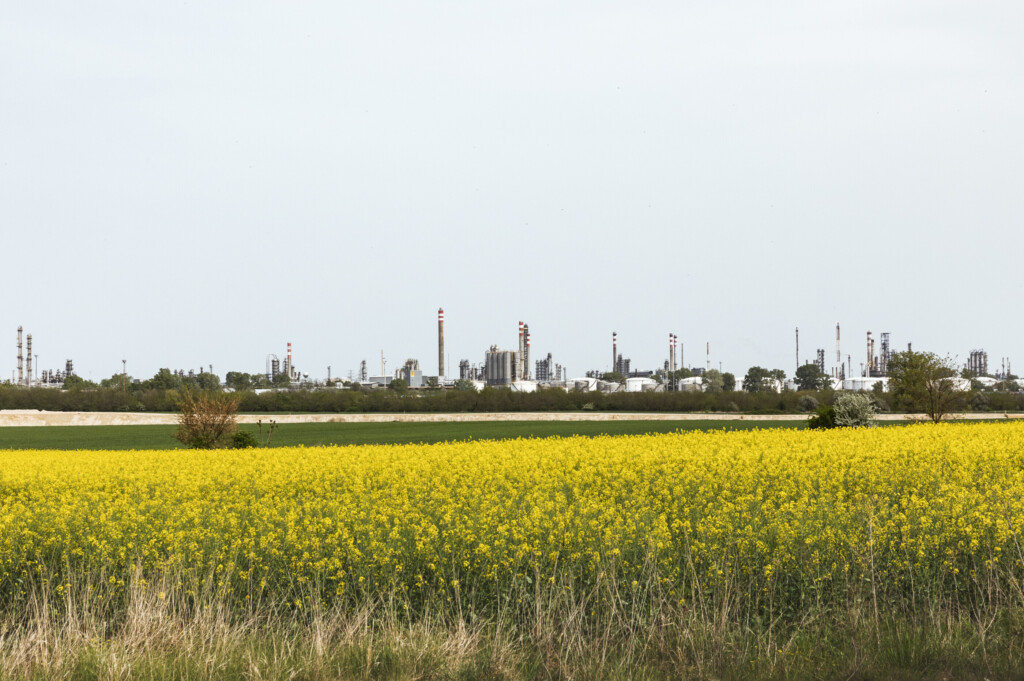
The Hungarian Biorefinery Pannonia Bio is cutting CO₂ emissions with a Vahterus reboiler, enabling carbon footprint reduction.
Fully Welded Plate & Shell Heat Exchangers (PSHE): Enabling Long-Term Sustainability
Fully welded Plate & Shell Heat Exchangers (PSHE) play a key role in enabling long-term sustainability in heavy industries. Designed for extreme pressures, hazardous fluids and high thermal loads, they deliver the reliability required while supporting lower-carbon operations. Beyond efficiency gains, welded technology enables safer processes, higher energy recovery and consistent performance in demanding applications, helping energy-intensive industries transition towards a low-carbon economy. These benefits are driven by their high efficiency and compact design, low fouling performance and long service lifetime.
High Efficiency and Compact Design
In industries such as oil refining, traditional Shell & Tube heat exchangers are widely used but often limited in heat transfer performance. This creates significant potential to improve existing processes. Switching to more advanced and compact technologies such as PSHE increases energy recovery and overall efficiency. By reducing the temperature approach in feed-effluent or cross-exchangers, companies can lower energy consumption, reduce operating costs and cut CO₂ emissions.
Plate & Shell Heat Exchangers are designed for demanding conditions while requiring only 20–25% of the space of conventional solutions. This makes them ideal for both new installations and retrofits in existing plants. Their compact design also reduces environmental impact by requiring less material, lowering steel usage and decreasing the overall carbon footprint.
Low Fouling for Stable Performance
Fouling is a major challenge in heat exchanger performance. As deposits build up, heat transfer efficiency decreases and pressure losses increase, leading to higher energy use and emissions. PSHE technology is specifically designed to minimise fouling:
- Corrugated plate design creates high turbulence, keeping surfaces clean
- High efficiency reduces surface area exposed to fouling
- Clean-in-Place (CIP) capability allows easy maintenance without disassembly
- Uniform flow distribution prevents low-velocity zones where fouling forms
The result is consistent performance, lower energy consumption and reduced emissions over time.
Long Lifetime and Lower Lifecycle Impact
The carbon footprint of a heat exchanger begins long before installation, with emissions generated during material extraction, manufacturing and transport. Extending equipment lifetime significantly reduces this impact. For example, doubling service life from 10 to 20 years can effectively halve the annual carbon footprint. A longer lifetime also reduces waste, as fewer replacements are needed. This lowers the demand for new materials and minimises disposal or energy-intensive recycling, further reducing environmental impact.
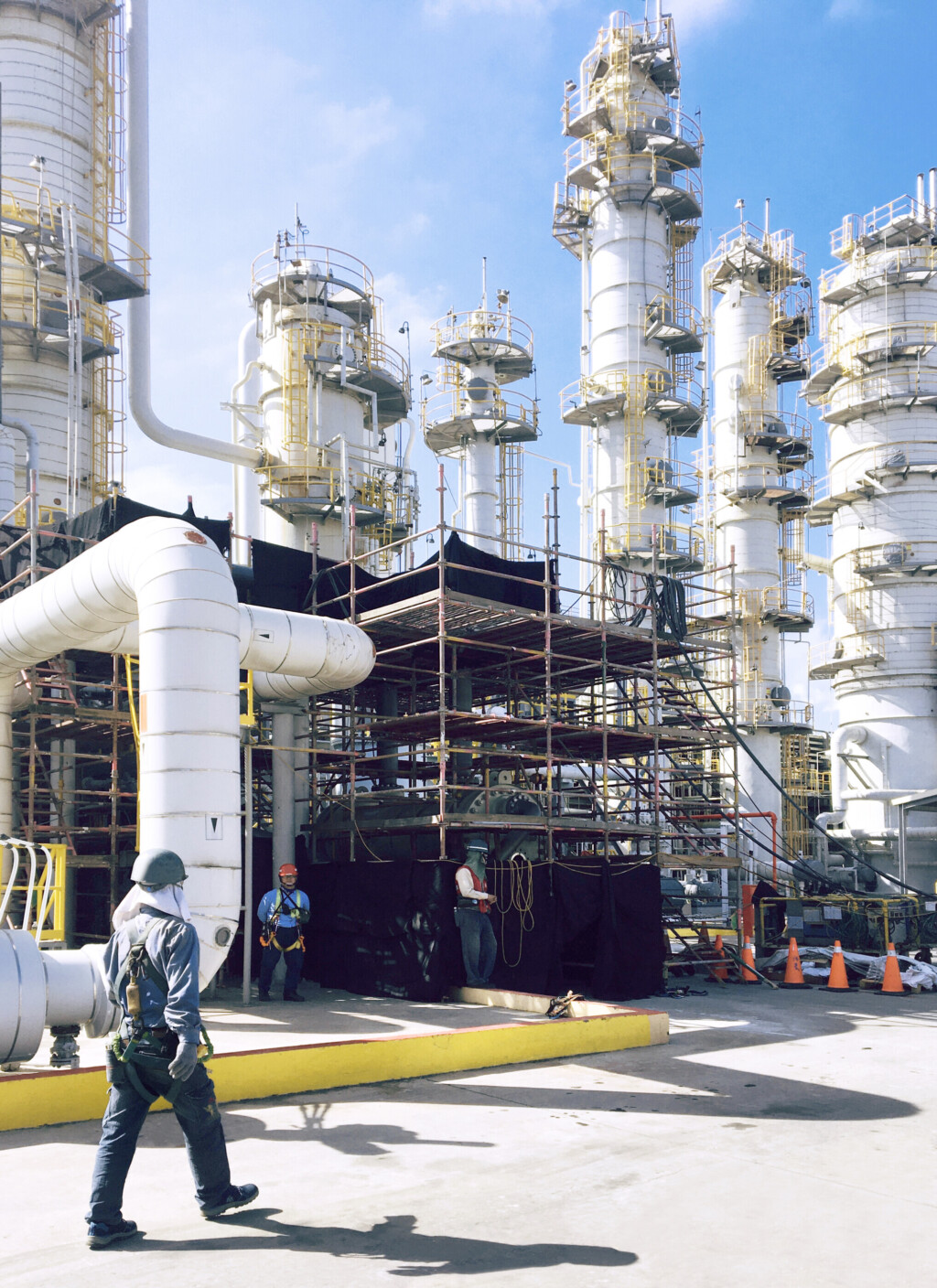
On-site assembly of a Vahterus heat recovery heat exchanger at an industrial site in Taiwan.
Efficient Carbon Capture Plants with PSHE Technology
Carbon capture plays a key role in reducing emissions in high-emission industries such as cement, oil refining and ammonia production. By removing CO₂ from process and flue gases for permanent storage, these technologies help lower overall environmental impact. However, to deliver real benefits, carbon capture systems must be highly energy-efficient. Most established carbon capture processes use amine technology, where solvents such as MEA absorb CO₂ from gas streams. This process is energy-intensive, particularly during CO₂ absorption and regeneration, making efficiency a critical factor for overall performance.
Plate & Shell Heat Exchangers (PSHE) support more efficient carbon capture by serving as lean-rich amine exchangers and amine reboilers. Their high efficiency, durability and low fouling characteristics help reduce energy consumption, lower the overall carbon footprint and improve plant safety and operability. The amine reboiler is one of the most critical components in a carbon capture system, as its performance directly impacts overall efficiency. PSHE technology provides a compact and reliable solution that can be easily integrated into existing plants. High thermal performance allows large heat duties to be handled with fewer units, reducing system complexity.
Building on these advantages, Vahterus reboiler solutions are designed to support efficient and stable operation in carbon capture plants. Vahterus thermosyphon reboilers offer low pressure drop, while Vahterus kettle reboilers enable precise temperature control. Their compact design reduces heat transfer area, supporting faster start-up, shorter solvent residence time and lower wall temperatures, helping to minimise fouling and corrosion over time.

The Vahterus team working together to support sustainable solutions for customers.
Ready to Explore?
The Vahterus Plate & Shell Heat Exchanger technology has consistently demonstrated compliance with, and performance beyond, recognised technical standards. It ensures dependable operation in demanding carbon capture applications, where efficiency and stable performance are essential to achieving meaningful emissions reduction.
To learn more about our PSHE solutions, please contact us below.