
NH₃ as fuel for maritime projects
As ammonia emerges as a promising low-carbon fuel for shipping, safe and efficient thermal management becomes increasingly important. With over three decades of innovation in fully welded Plate & Shell Heat Exchanger (PSHE) technology, Vahterus helps empower the green energy transition at sea and beyond through proven heat transfer solutions.
Keeping Ships Running with the Science of Heat Transfer
Heat exchangers play a vital role in maritime vessels, helping manage temperatures across onboard systems and fluids. Ships rely on powerful engines and complex machinery that generate significant heat, and without effective cooling, equipment performance, reliability and efficiency would suffer. A heat exchanger transfers heat from a hot fluid or gas to a colder one without mixing the two media.
A common example is using seawater to cool heated freshwater circulating through the engine cooling system. This keeps engines, lubricating oils and other critical systems within safe operating temperatures while preventing seawater, with its salt, algae and microbes, from coming into direct contact with sensitive equipment. Heat exchangers are also essential for refrigeration and freshwater production, fuel conditioning and temperature control as well as onboard comfort systems such as air conditioning. In summary, heat exchangers are indispensable to the safe and efficient operation of modern vessels.
The Case for Ammonia as a Marine Fuel
Reducing greenhouse gas emissions is a key priority for the maritime industry, making fuel choice central to the transition towards more sustainable vessels. Throughout history, shipping fuels have evolved from coal and oil to diesel, natural gas and methanol. However, all these fuels contain carbon and therefore release carbon dioxide when burned. Ammonia (NH₃), by contrast, contains no carbon and, in theory, can produce only nitrogen and water when combusted cleanly.
This makes ammonia a promising alternative for reducing shipping emissions, provided it is produced using renewable energy sources. It also offers practical advantages, including relatively high energy density and favourable storage conditions compared to many other zero-carbon fuels. In addition, ammonia can be stored and transported using established technologies and infrastructure. Existing supply chains already handle large volumes of ammonia for the fertiliser industry, while its use as a natural refrigerant continues to grow in industrial refrigeration applications.
While ammonia offers significant potential as a low-carbon marine fuel, its successful adoption depends on safe, reliable and efficient system design.
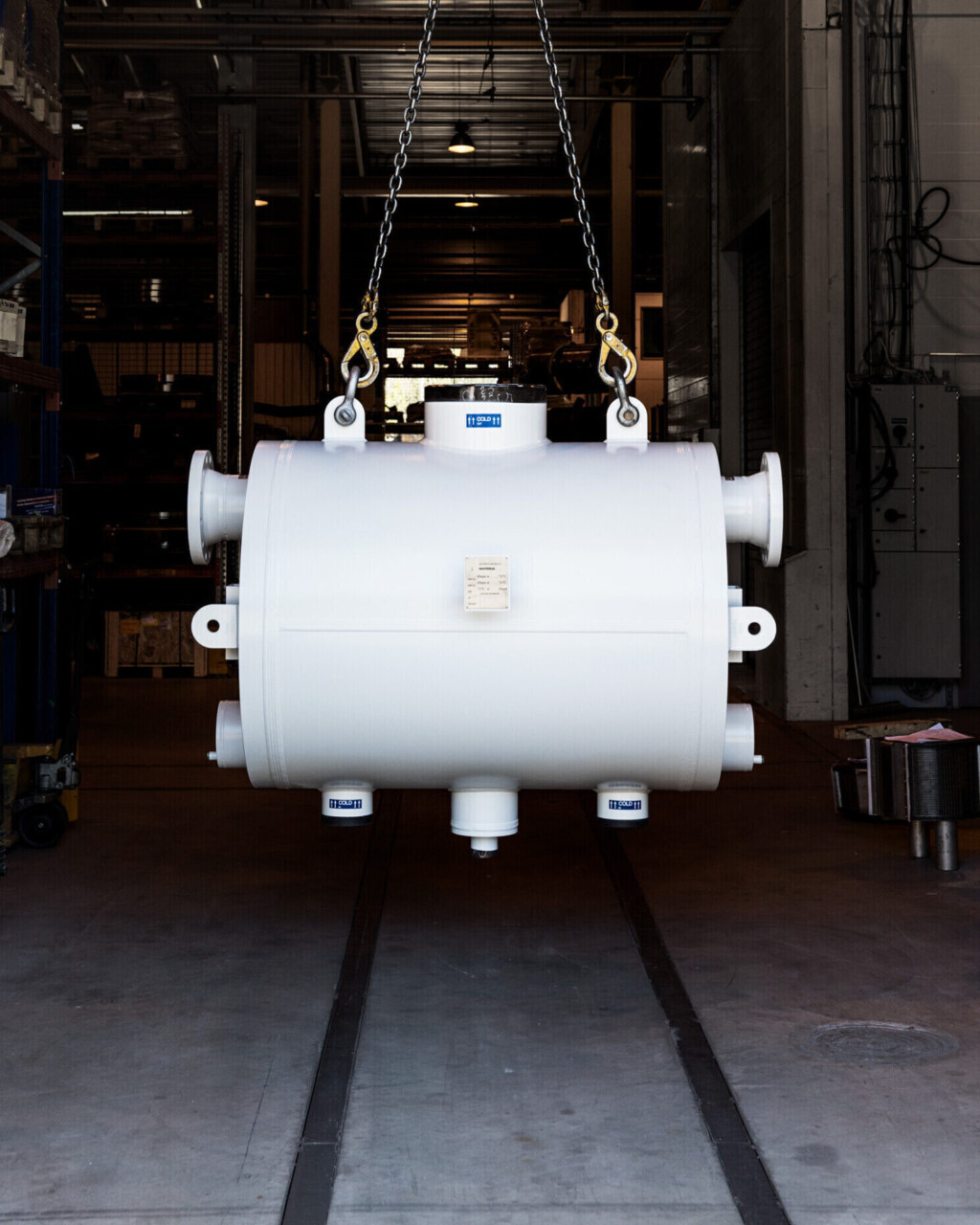
With over three decades of innovation in fully welded Plate & Shell Heat Exchanger (PSHE) technology, Vahterus helps empower the green energy transition at sea.
Meeting the Demands of Ammonia Fuel Systems
The successful adoption of ammonia as a marine fuel depends on more than fuel availability alone. Safety, proven application expertise and sustainable equipment design all play an important role. With decades of experience in ammonia heat transfer, Vahterus helps support this transition with solutions designed for demanding marine environments.
Safety by Design for Ammonia Applications
As ammonia requires careful handling and robust containment due to its properties, safety is a key consideration in ammonia system design and operation. This is where the Vahterus Plate & Shell Heat Exchanger offers a distinct advantage. Our design places the heat transfer plates inside a protective pressure vessel and uses fully welded seams instead of gaskets on the plate pack.
The fully welded construction eliminates potential leak paths associated with plate pack gaskets, enhancing safety and reliability in demanding ammonia applications. It also supports high operational availability while helping reduce maintenance requirements.
In the heat exchanger industry, the term permeability is often used when discussing gasketed heat exchanger designs, including Plate & Frame and Semi-Welded units. While permeability may sound insignificant, it refers to the movement of small amounts of media through gasket materials over time.
Because Vahterus PSHEs use a fully-welded plate pack without gaskets, ammonia cannot permeate through gasket materials. This helps prevent ammonia odour in fuel handling spaces and supports safer operation onboard.
Proven Ammonia Expertise
As ammonia fuel projects continue to advance globally, the need for proven application expertise has become increasingly important. Vahterus brings more than 20 years of experience in ammonia heat transfer to this emerging field. Ammonia refrigeration is one of our core areas of competence, involving the condensation, evaporation, heating and cooling of ammonia across a wide range of industrial applications. Through thousands of ammonia installations and extensive in-house testing, Vahterus has developed deep knowledge of ammonia-based processes and system requirements.
Building on this foundation, we have worked closely with partners to develop next-generation heat transfer solutions for marine fuel systems, including applications for both 2-stroke and 4-stroke engines. Vahterus units have already been successfully tested in a variety of configurations, helping support the safe adoption of ammonia as a marine fuel.
Reducing Environmental Impact Beyond Operations
Environmental considerations extend beyond operational efficiency and emissions. Materials used throughout a product's lifecycle also play an important role. In heat exchanger applications, gasket materials may contain substances that can be difficult to recycle at end of life, contributing to additional waste handling requirements.
As a gasket-free solution made entirely from steel, the Vahterus Plate & Shell Heat Exchanger supports a circular approach to material use. The sustainable design is compatible with fossil-free steel developments and can be readily recycled at the end of its service life. Once decommissioned, a Plate & Shell unit can be melted down and reused as raw steel.
In addition, each Vahterus PSHE is optimised for its specific application. By tailoring the unit size and configuration to process requirements, we can help minimise material usage while maintaining the required thermal performance.
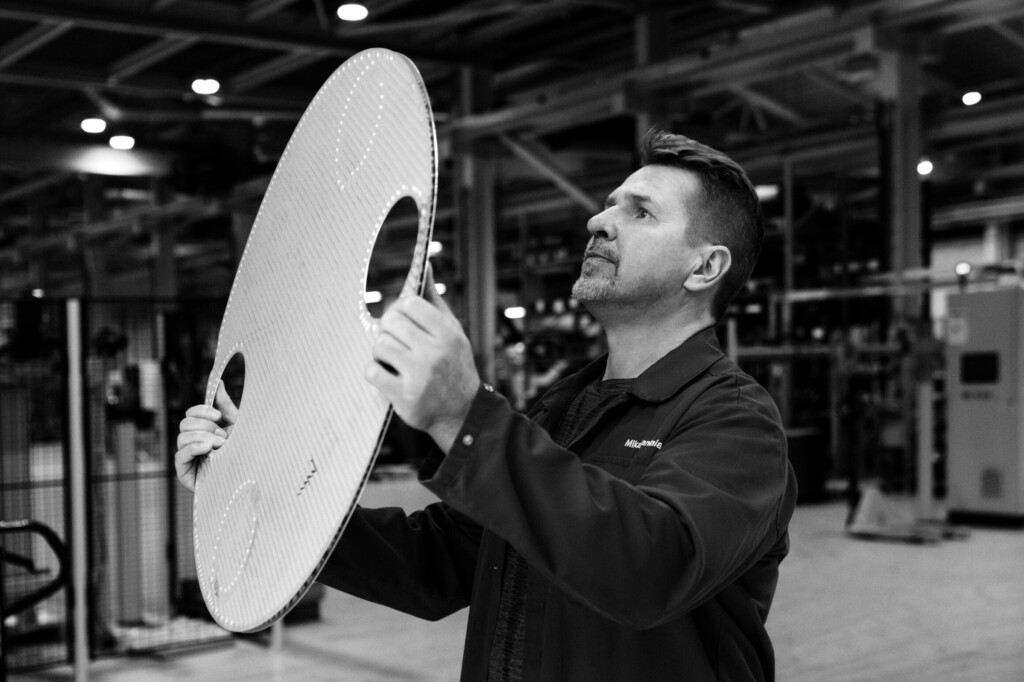
In Vahterus PSHE solutions, we place heat transfer plates inside a protective pressure vessel, using fully-welded seams instead of gaskets. This offers the highest operational availability and safety on the market.
Ready to Explore Solutions?
By combining safety-focused design, proven ammonia expertise and a commitment to sustainable engineering, Vahterus helps support the growing adoption of ammonia as a marine fuel. Our fully-welded Plate & Shell Heat Exchangers are designed to meet the demanding requirements of maritime applications today while supporting the green energy transition at sea and beyond.
If you would like to learn more about our solutions, please get in touch with our experts via the button below.
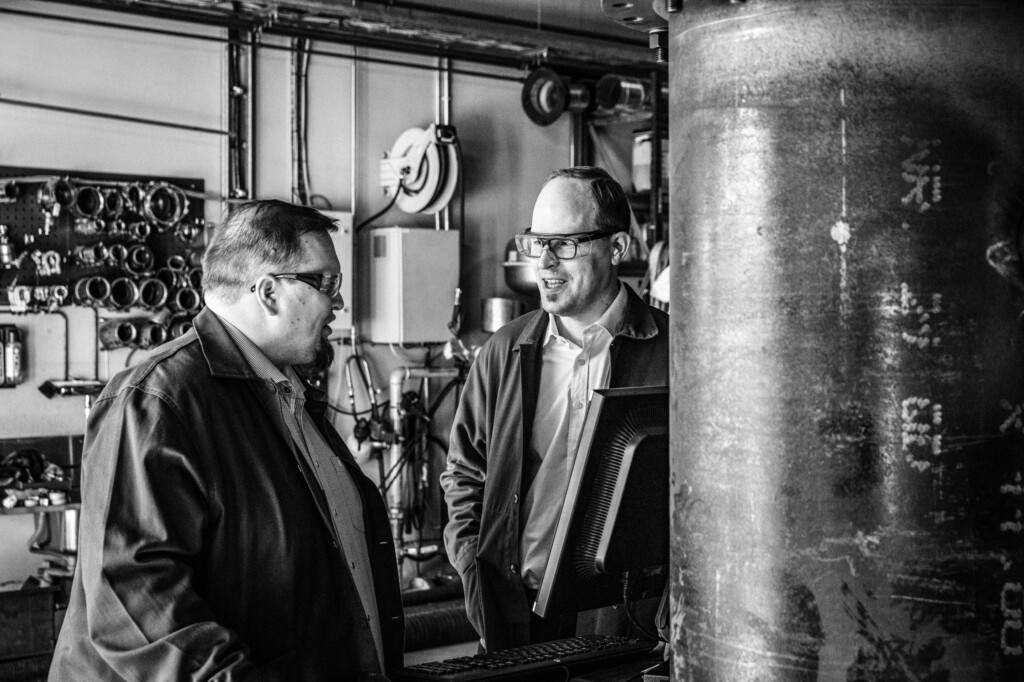
Vahterus industry experts Lauri Bastman (left) and Frans Launonen (right) pictured at Vahterus facilities in Kalanti, Finland.